My child refuses to try new foods: what to do about food neophobia?

From their high chairs, some babies don't hesitate to close their mouths . turning their head away, pushing their plate away, throwing their spoon, or simply saying no when trying new foods. This reluctance or this rejection This could be an expression of food neophobia . a protective reflex that usually manifests around 18 months.
What is food neophobia in children?
Food neophobia is most common in children aged 2-10. Before 18 months , it's more accurately described as reluctance or mistrust . At the same time, put yourself in your child's shoes: a Jerusalem artichoke can seem suspicious the first time! Joking aside, the fear of eating new foods can make everyday life a little complicated. It's therefore important to better understand this phenomenon of food neophobia and find solutions to help your baby feel comfortable with their meals!
“In France, 75% of children aged 2 to 8 exhibit neophobic behaviors (refusal to taste certain foods, to try new dishes, or even refusal of foods they previously enjoyed)¹”
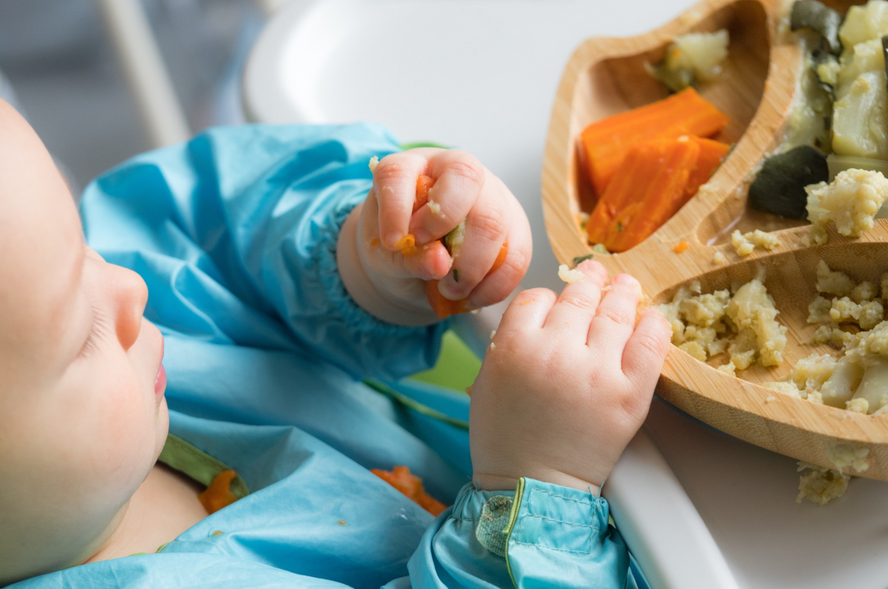
Distinguishing between a child suffering from neophobia and a difficult or overly selective child is not always straightforward. According to the Nutritional Resources and Information Center, What should concern you is if the rejection occurs even before the child puts the food in their mouth. If they express their refusal in advance at the mere sight of a vegetable or by smelling it, then it could be neophobia . Another frequently mentioned sign is fiddling with food for several minutes before putting it in their mouth. The child looks at it, touches it, squishes it, moves it from one side of their plate to the other… (which tends to make you lose patience). In short, they're stalling to avoid actually eating. If this behavior recurs every time you offer them a new culinary experience , then this too could be neophobia .
Why does my child refuse to taste it?
No! In reality, what worries babies exhibiting food neophobia is often the novelty factor. Their anxiety will then tend to grow when faced with the discovery of a new food , and sometimes even with a completely new recipe. Take carrots , for example: whether eaten raw and whole with or without the tops, as a purée, in a gratin, in a soup, or with Vichy carrots, they will clearly never look the same . What is " new " for your child is therefore often what they don't recognize! (and not just what they don't know). It is therefore essential to give them a heads-up by presenting the dish before serving it to them. (as they do in fine restaurants!).
How should I react when my child refuses to taste it?
When a child categorically refuses a food, it's not always for the sake of saying no; it might simply be because they don't like it or because they've developed a form of fear : food neophobia. It's therefore important, as parents, to try to read between the lines to understand what's really going on. If it's a matter of taste, that doesn't mean you have to eliminate the food from their life! On the contrary, the key will be to offer it to them from time to time, perhaps in a different form, texture, or recipe. If fear is what's holding the child back, then you'll need to take the time to demystify the situation by showing them that you also eat broccoli and that everything is fine for you. With age, not only do tastes change , but the socialization factor also comes into play! Eating broccoli at daycare or the school cafeteria with friends is nothing like the experience at home. If peer influence is strong, it also means that your own behavior, or that of other siblings, can have an impact. When it comes to food, imitation plays a role. and setting a good example can make your life easier .
How can I help a child try new foods?
Even if he doesn't say it, your youngest is just like you—he likes having choices ! Having a fruit bowl at home or showing him vegetables will already influence his current cravings. The earlier children learn to know and recognize what they eat—by naming the fruits— the better. And vegetables By touching, smelling, tasting, and cooking them, children will be more likely to want to eat them. Knowledge of fruits and vegetables is therefore also part of the solution for reducing a child's food neophobia. In any case, always keep in mind that every child is different and that you must continue to offer, and offer again and again. fruits and vegetables. Don't lose patience, culinary curiosity is for life!
Should we be worried if food neophobia persists?
According to some studies² , the earlier a child is exposed to a wide variety of smells and flavors, the less likely they are to have food aversions. This acceptance could even begin in utero or during breastfeeding: in other words, a varied and balanced diet during pregnancy³ and the first few months after birth helps make your baby a little adventurer of taste! Similarly, take advantage of the first few months of introducing solid foods. to introduce him to as many flavors as possible ( (making sure, of course, to offer him the foods one at a time). As long as he is motivated and willing, you can then enrich his palate with new smells, tastes and textures!
¹Duchesse Kids, interview with Sophie Nicklaus, Research Director at INRAE, Centre for Taste and Feeding Sciences in Dijon.
²NICKLAUS, S. & MONNERY-PATRIS, S. How does food neophobia affect children's eating habits? Origin, development and practical consequences for parents and educators. Cahiers de nutrition et de diététique, 2024, doi: 10.1016/j.cnd.2023.12.003.
³Schaal B, Marlier L, Soussignan R. Human fetuses learn odors from their pregnant mother's diet. Chem Senses 2000;25:729-37