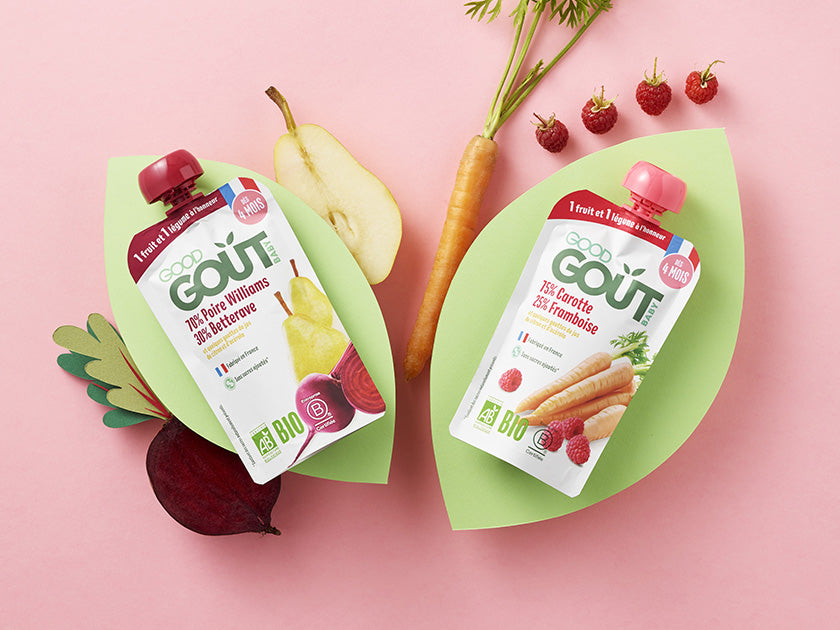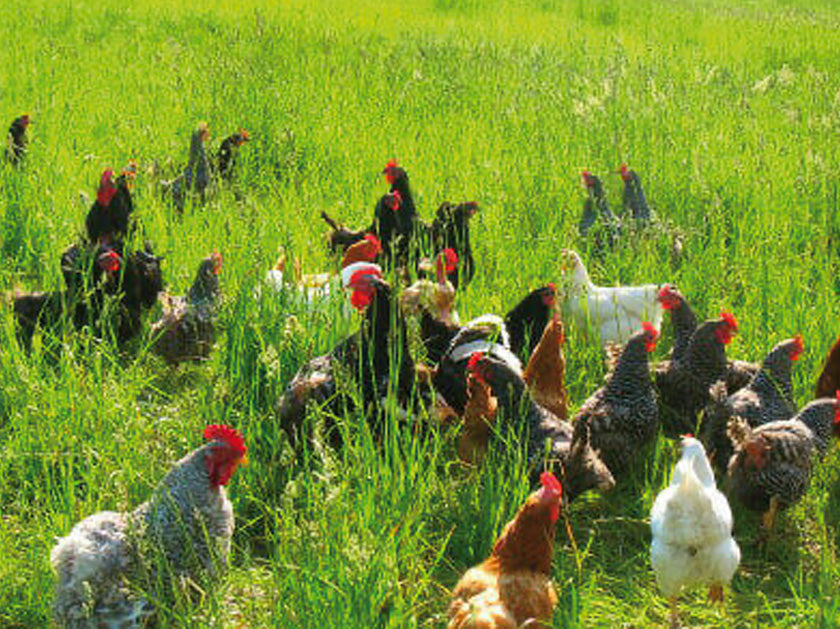
At Good Goût , we've chosen to give our little ones the very best by cooking with fruits, vegetables, fish, and meat, all organically grown. Just like the saying "all cats are gray at night" and "from a distance, all chickens look healthy"... Yet, a "conventional" chicken has nothing in common with an "organic" chicken except its beak and feathers! So play our game of spot the difference to better understand what you're buying.
Pampered poultry for less stress
1- First of all, only rustic breeds can claim to be organic because they adapt better to outdoor farming, their growth is slower and their meat is of better quality.
2- Unlike conventional chicken, organic chicken is raised outdoors for a large part of the day. This gives them greater freedom: more space, more light, contact with nature, and therefore less stress. It works just like with us, really: why choose a crowded subway car when you can go for a bike ride?
Well-fed poultry to grow up healthy
3- The feed given to organic chicken is healthier, more balanced and above all worthy of a granivore and not a carnivore! Indeed, organic chicken feeds on what it finds in nature as well as cereals and legumes that are 95% organic and without GMOs or chemical substances, whereas industrial chicken can consume animal fats and meal, as well as soy (GMO).
4- Consequently, organic chicken grows more slowly than industrially farmed chicken. This is why it is slaughtered at a minimum age of 81 days, compared to 42 days for industrially farmed chicken. Slaughterhouses guarantee controlled hygiene conditions and specific expertise.
Healthy poultry for healthy toddlers
5- Organic chicken is more nutritionally beneficial. It is richer in Omega-3 fatty acids than factory-farmed chicken (especially if it has been fed flaxseed). Furthermore, it provides more polyphenols, which are powerful antioxidants, more vitamins (particularly Vitamin C), and also more magnesium.
6- And pesticides? They remain extremely rare in organic chicken meat, whereas they are found in large quantities in conventional chicken.
7- Last but important point: the care given to the chickens. Unlike organic chicken, factory-farmed chicken receives many antibiotics, vaccines, and growth hormones. Organic chicken, on the other hand, is treated more naturally using homeopathy, herbal medicine, and even aromatherapy (essential oils).
Now that you know how to tell them apart, all that's left is to cook it...
... or you can turn to our delicious little dish of Organic Carrot and Chicken (with a hint of clementine juice!).
Sources:
http://www.annuairevert.com/p81-la-volaille-bio.php http://www.toutsurlavolaille.com/article-types-volailles-selon-labels.html http://www.biolineaires.com/articles/focus-produits/254-poulet-de-chair-bio-:-lequel-choisir-%28suite%29.html#.UyHb2oXCaDA