How to manage the introduction of protein into your baby's diet?

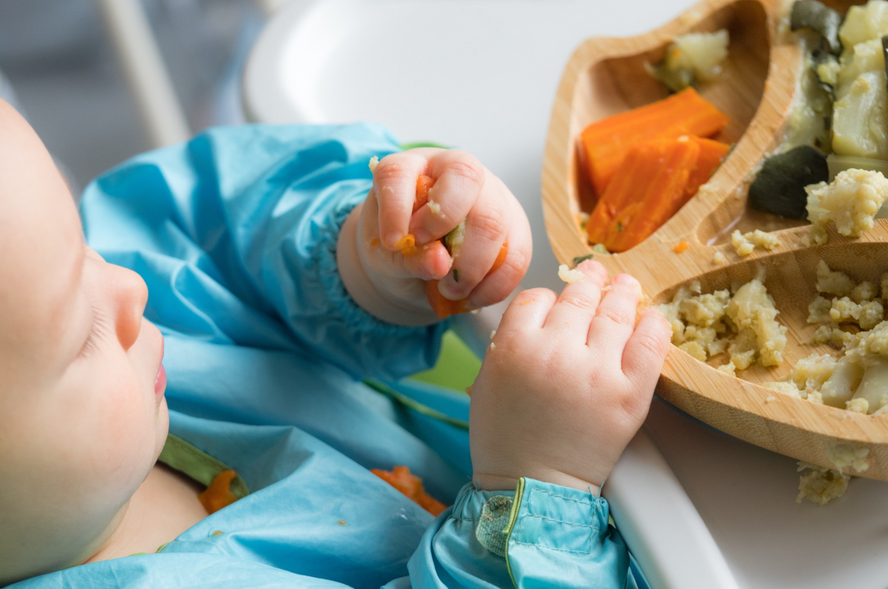
So, your baby is already eating lots of different fruits and vegetables: a great step forward in introducing them to solid foods . But hold your horses, this phase of navigating between perseverance and wonder isn't over yet. Now it's time to introduce them to the wonderful world of protein! Which meat should you start with? At what age should you start introducing meat? How much meat should a 12-month-old eat? A 6-month-old? We'll tell you everything!
Why introduce protein into your baby's diet?
Because proteins are building blocks of our cells, they are so fundamental: they play both a structural (building) and energy-producing role. In short, they have a very important role to play in your child 's growth : it is thanks to them, in particular, that your baby 's body can defend itself against viruses and bacteria.
Proteins have a high content of so-called "essential" amino acids. These are unique in that they cannot be produced by the human body (unlike "classic" amino acids). The only way to provide them to your baby is therefore through their diet . And luckily, fish , meat , eggs , as well as grains and legumes, are full of them!
When is it advisable to introduce meat into your baby's diet?
To ensure your baby 's gut flora—which aids in food digestion—develops smoothly and without disrupting their delicate system, it's essential to introduce new foods gradually, starting with the easiest to digest and progressing to the most complex. This is why proteins , especially animal proteins, should be introduced AFTER fruits and vegetables, ideally from six months of age.
From 6-7 months, you can introduce fish and meat . All types of fish are suitable for your child . Note that oily fish such as salmon , mackerel , or sardines are particularly beneficial. These fish are excellent for your baby because they are rich in DHA (an omega-3 fatty acid that plays a crucial role in the development of the brain, nervous system, and vision). However, be VERY careful when checking for bones. It's time to get out your glasses and tweezers for a quick inspection! The vast majority of meats can be given to your child, such as white meats (chicken, turkey, etc.) and some red meats (sirloin steak and rump steak). However, offal and processed meats are not recommended for babies , with the exception of lean ham (rindless and low-sodium).
From 7 months onwards, you can only introduce egg yolks (cooked and mashed), as egg whites have a high allergenic potential. Ideally, you should wait until 12 months to introduce egg whites.
How much protein does your baby need?
Your baby 's nutritional needs change as they grow . That's why the amount of protein you give them should also change with their age.
From 6 to 8 months, 10g of protein per day is sufficient. In practical terms? This represents 2 teaspoons of meat or fish.
From 8 to 12 months, 20g of protein is recommended. This represents 4 teaspoons of meat or fish .
For eggs , it will be half a yolk between 7 and 9 months and 1 whole yolk between 9 and 12 months.
From 12 months onwards, your child starts to grow and you should increase their intake to 30g of animal protein per day. This represents 6 teaspoons of meat or fish or ½ a hard-boiled egg (whole).
How to incorporate these new foods into your baby's meals?
First basic rule: it's recommended not to mask a new taste with another. The very first time you introduce your baby to meat , fish , or eggs , present the food on its own. This will allow them to identify the new taste (even if they don't love it instantly) and you'll be able to better understand their preferences.
Ideally, these new foods should be incorporated into your lunch. Excessive protein intake, especially in the evening, is not conducive to good digestion and therefore to quality sleep.
Think you're running out of tools to cut/chop meat and fish into tiny pieces? Chef's tip: use your herb scissors or even a mini blender to cut food even finer.
Once the discovery phase is over, how do you cook these animal proteins for your baby?
And to make your life easier, Good Goût has thought of everything and created a Protein Introduction Pack for babies from 6 months old, featuring a variety of recipes made with good organic meat and fish. We've also thought of older babies with age-appropriate recipes for babies from 8 to 15 months, with textures ranging from smooth purée to mashed/crushed and then to soft pieces.