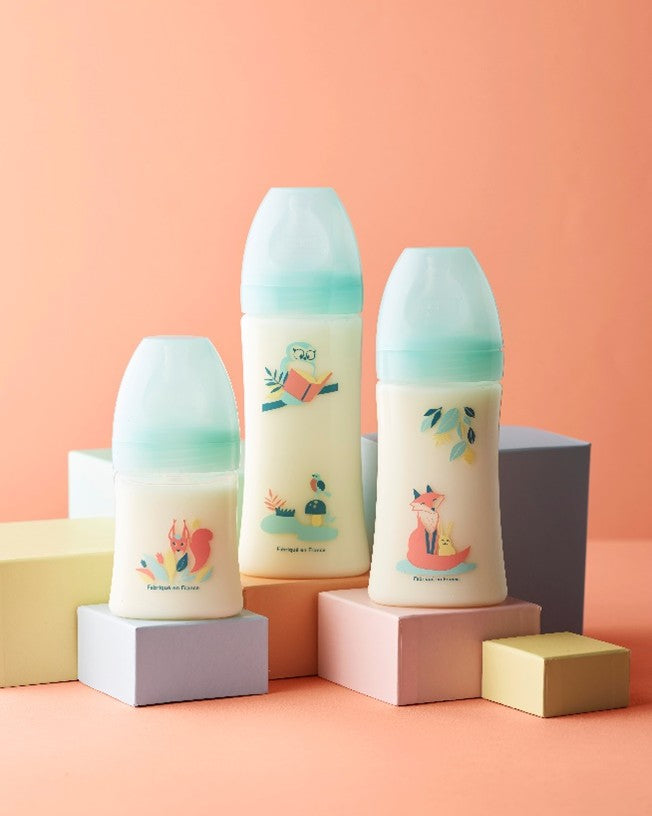
Drink! What water for your baby?

1) Water!
While proper hydration is essential at all ages, it's important to know that a baby's water needs are , proportionally to their size, about four times higher than an adult's. This is because babies tend to lose a significant amount of water through sweating (perspirant) and especially through perspiration (the insensible evaporation of water from the skin).
Furthermore, your baby's immature kidneys are still developing and struggle to eliminate toxins and waste. Therefore, they need to produce large quantities of urine to purify their little body.
To replace all this lost water, it is therefore necessary to reintroduce it...directly orally :)
2) Nothing but water...
Up to 4 months, the water contained in milk (breast or infant) is sufficient to meet its needs.
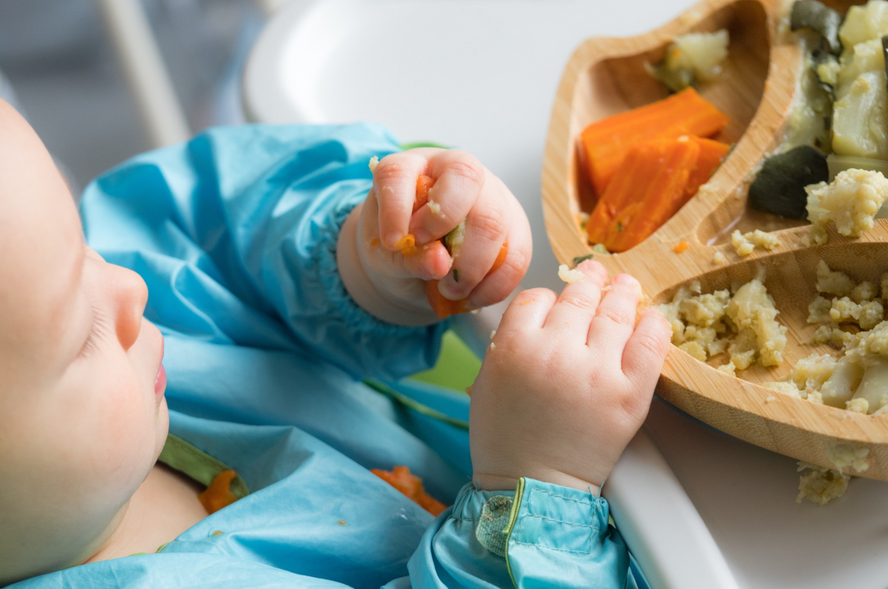
Then, after 4 months , when solid foods are introduced , the baby's water needs increase because all the foods they discover contain less water than milk. However, be sure to give them only pure water . Avoid fruit juices, and especially syrups.
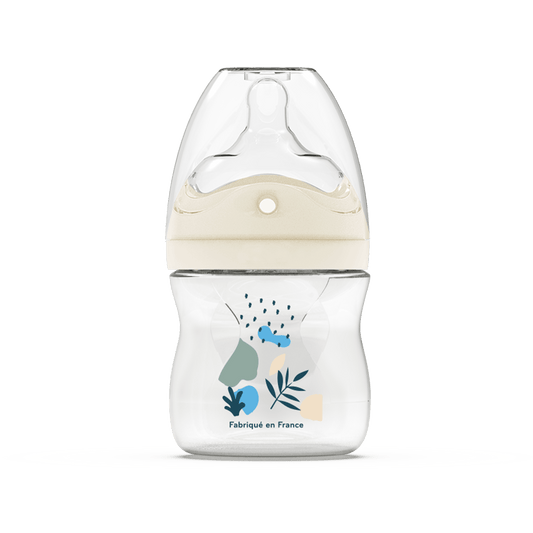
Around their first birthday , your baby's food will start to resemble yours, becoming more solid. It's therefore important to hydrate them accordingly: half a liter of water per day (in a glass or bottle ). And since they're starting to be quite active, always make sure they have water available.
3)... but not rainwater!
Okay, that's all very well, but what kind of water should you give your baby?
First, it needs to be very low in minerals to avoid overheating your baby's kidneys. It must be very low in nitrates —less than 15mg per liter—as these are considered toxic for infants. Finally, this water must be free of microbes...
It is for all these reasons that pediatricians advise giving low mineral waters - less than 500mg of minerals per liter - such as Mont Roucous (22mg per liter), Montcalm (32mg per liter) or Wattwiller (155mg per liter).
These mineral waters have the advantage, compared to spring water, of coming from protected underground aquifers, which ensures high purity and a stable, consistent mineral content. That being said, a bottle of spring water labeled "suitable for preparing infant formula" is, of course, a good choice.
Finally, according to the French Agency for Food Safety (AFSSA), tap water can also be suitable, provided you check its mineral content and nitrate levels beforehand. If you decide to use tap water, remember to boil it before adding it to the formula powder in the bottle.
There you have it, you know everything now, that's one less question to worry about, and that feels good! Oh, just one more thing: bottled water doesn't withstand light and heat. So don't keep an open bottle for more than 24 hours , and above all, nobody drinks straight from the bottle! ;)