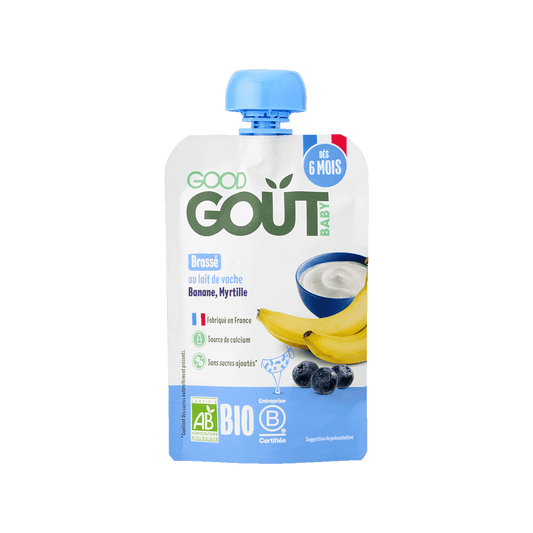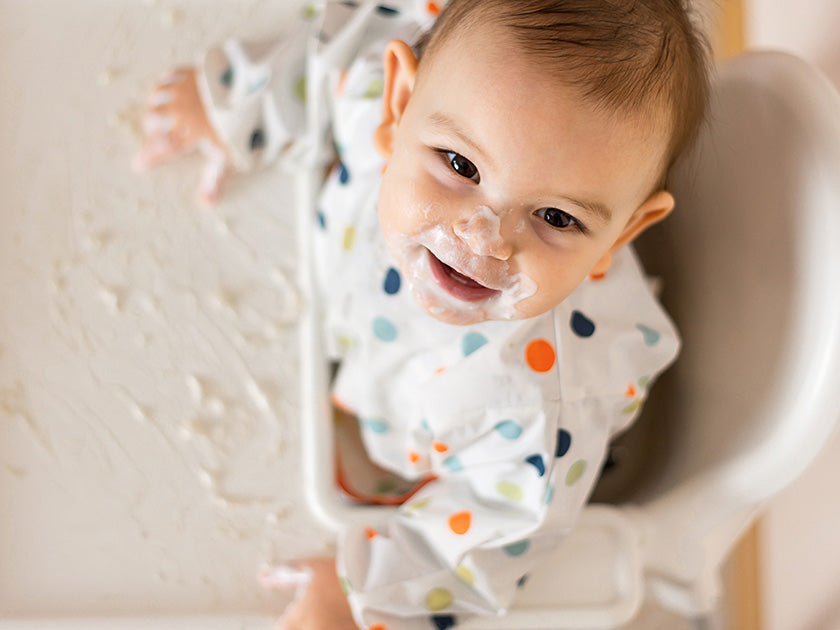
Plain, fruit-flavored, stirred... When it comes time to give baby their first yogurt (and what age is appropriate for baby yogurt anyway?), it's hard to know where to start. The difference between regular yogurt and baby yogurt isn't always obvious if you're not an expert. It's time we shed some light on the subject!
What exactly are baby yogurts? How are they different from regular yogurts? Why give babies special yogurts?
Firstly, unlike regular yogurts, baby yogurts are subject to regulations concerning infant nutrition (Directive 2006/125/EC). These regulations impose stricter specifications than those for traditional food, particularly regarding food contaminants (natural or synthetic substances that can be found in food and result from cultural practices or production processes, such as additives, substances from materials in contact with food, etc.), the maximum permitted levels of which for infant food are much lower than for regular food.
Furthermore, from a nutritional standpoint, baby yogurts are more balanced. Their sugar, fat, and protein content is tailored to babies' needs, preventing excesses. Indeed, regular yogurts are often too high in protein for infants. Numerous studies have shown that excessive protein intake during the first two years of life is associated with an increased prevalence of childhood obesity*. Therefore, baby yogurts offer a clear nutritional advantage.
Finally, baby yogurts have the particularity of being stored at room temperature. This is why they cannot be called "yogurt": the pasteurization of fermented milk, necessary for this method of preservation, eliminates the lactic acid bacteria normally found in yogurt (Lactobacillus bulgaricus and Streptococcus thermophilus) which are essential for the "yogurt" designation.
At what age should babies start eating yogurt?
Baby yogurt can be given from 6 months of age . It's generally offered to babies as a dessert at lunch or as an afternoon snack. While it's common to give baby yogurt during a meal without a bottle, it doesn't replace breast milk! It's best to choose yogurt without added sugar; the natural sugars from the fruit are enough to make it palatable for our little ones!
What is the difference between our stirred yogurts and other baby yogurts?
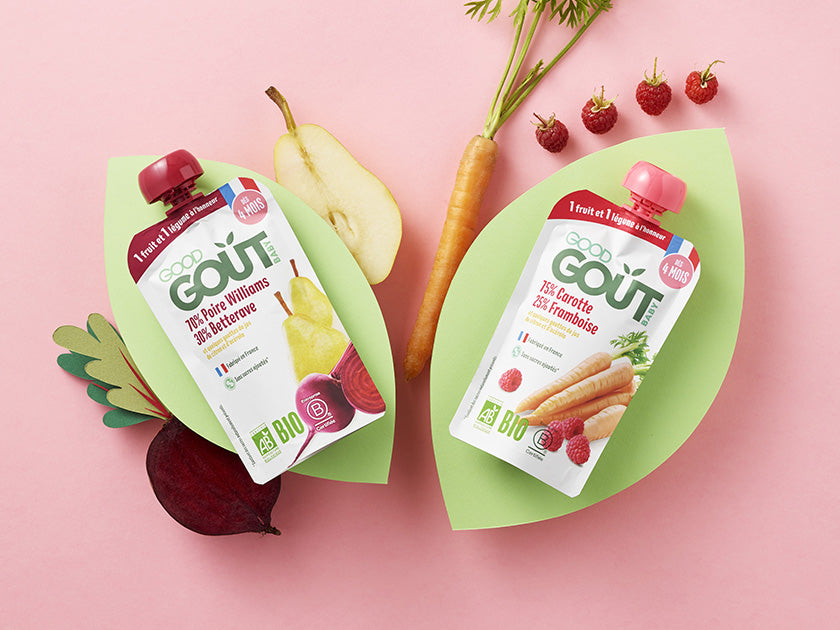
At Good Goût , we pride ourselves on offering your child delicious products that contribute to their development while being nutritionally appropriate. That's why we've developed our products based on two sets of specifications: current regulations regarding infant nutrition and the nutritional recommendations of a panel of early childhood nutrition professionals. All our blended baby food recipes have been created based on these guidelines and are adapted to the needs of babies.
Our 90g format adheres to nutritionists' recommendations for the recommended protein intake per serving, while also satisfying your children's appetites thanks to the addition of ingredients that promote a feeling of fullness. Our bowls and pouches of smoothies offer the perfect balance of smoothie, fruit, and cereal to meet your child's needs, whether for dessert or a snack, in accordance with nutrition professionals' recommendations. In addition to their sweetness, the fruits provide natural sugar, allowing us to offer recipes with no added sugar. The cereals, meanwhile, provide creaminess and flavor to introduce your child to new tastes.
They are also more nutritionally and taste-wise better than the starch often used. Furthermore, our stirred yogurts are made exclusively from fermented milk, which is the same as real yogurt. We add no milk or milk powder, for an even smoother taste.
Finally, like all other Good Goût products, our yogurts comply with organic farming standards. This allows us to guarantee your child healthy products that are good for the planet: none of our ingredients have been harmed by GMOs, pesticides, or other chemical fertilizers during their rearing or cultivation.
When should you start giving your baby regular yogurt? Which yogurt can replace a bottle?
There's no consensus on this: some pediatricians recommend waiting until a baby is 7-8 months old to eat regular yogurt, while others allow it a little earlier. However, most agree that baby yogurts are more suitable for young babies (if you're wondering why, reread the beginning of the article!).
Yogurt is not a substitute for bottle-feeding or breastfeeding, and it is strongly advised against considering dairy products as a replacement for infant formula or breastfeeding. However, from a certain age, as the number of bottles per day decreases, it is possible to offer dairy products to your baby during meals when they are not bottle-feeding or breastfeeding.
Now that baby yogurts hold no more mysteries for you, go ahead and give them a try!
*Source: Michaelsen & Greer, American Journal of Clinical Nutrition, 2014