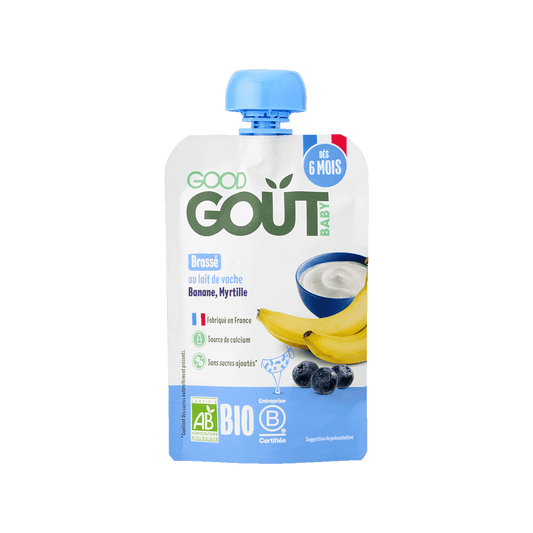
Whether you're a Camembert lover or you hate cheese, sooner or later you'll inevitably ask yourself that fateful question: "Is it okay for my baby to eat cheese?" Here's the answer on a (cheese) platter!
First, remember that introducing solid foods is an exciting stage that usually begins between 4 and 6 months, under the expert guidance of a healthcare professional. Every baby is unique, so be sure to discuss this with your pediatrician to personalize this culinary adventure safely and according to your little one's specific needs.
According to health authorities, raw milk and raw milk cheeses (due to the risk of infection) should not be given to children under 5 years old, with the exception of Emmental, Comté, and Parmesan. Phew !
Therefore, to ensure a healthy and safe diet, it is necessary to favour CHEESES MADE FROM PASTEURIZED MILK and, as you will have understood, to avoid cheeses made from raw milk.
From what age can a baby eat cheese?
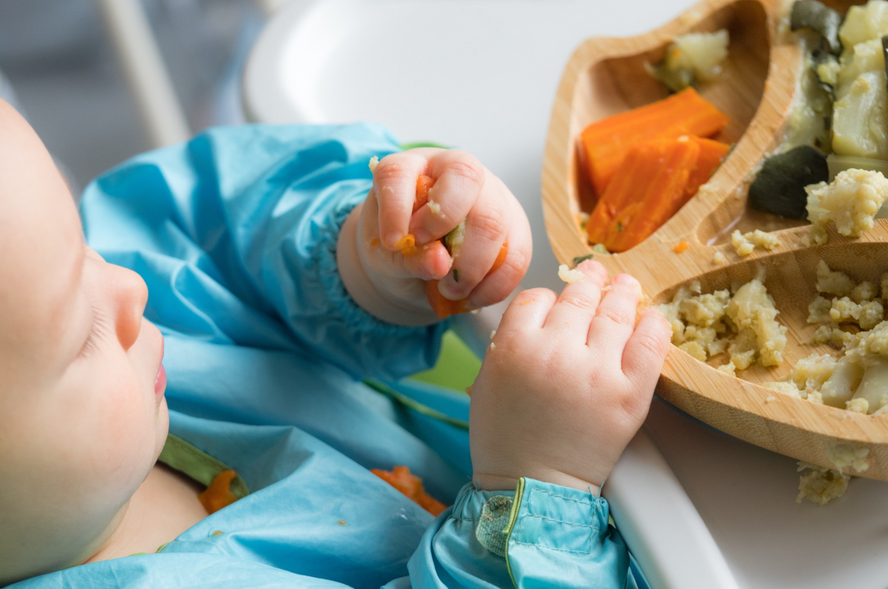
Between 4 and 6 months , you can introduce unsweetened cottage cheese and add a few touches of grated cheese to melt into the purees (such as Emmental, Comté or Parmesan).
From 6-8 months , you can delight your baby's taste buds by gently introducing small pieces of soft cheese .
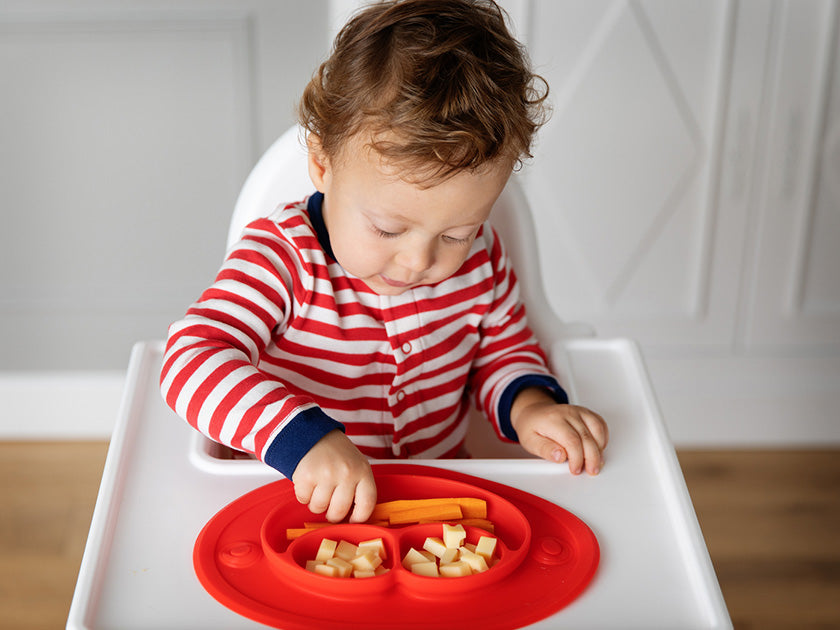
From 10 months onwards , things can get serious: thanks to their little teeth, babies will be able to bite into cheese. Of course, you should still avoid 24-month aged Comté. You can therefore offer harder pieces of cheese that your baby can easily nibble on . Ideally, offer your baby small slices of cheese made from pasteurized milk. This way, they can grab them and discover their delicate fruity aromas for themselves!
How much cheese is suitable for a baby?
Known for its fat and protein content, cheese can be a regular guest at baby's table, provided that the quantities are adjusted according to their age.
We start with 5 grams at the beginning of food diversification , at a rate of 2 to 3 times per week, then we move to once a day around 9 months in place of a dairy product.
After one year, you can increase to 15 or 20 grams per day, but no more! 2.3
Which cheeses should not be given to a baby?
While most of the cheeses on the platter are tempting to little gourmets, not all are suitable for them.
Avoid processed cheeses for children under 3 years old because they contain melting salts, additives not permitted in their diet !
Finally, it's worth remembering that raw milk cheeses , such as Reblochon, Roquefort, Salers, Brie, Picodon, Pélardon, some Camemberts, Morbier, and Mont d'Or, should not be given to toddlers. They will have to wait until they are 5 years old to enjoy these delicacies. 1.4
Make a cheese out of this culinary experience with your little one and don't forget to share your cheesy adventures with us :)
Important notices
Semi-skimmed, skimmed and 0% fat dairy products are not suitable for children under 3 years old; they do not provide enough fat, which is essential at this age for proper development.
Dairy products/cheeses are not a substitute for breast milk or infant formula.
Sources:
- https://www.fromagesaulaitcru.fr/precautions-particulieres-en-matiere-de-consommation-et-de-conservation
- Young children aged 0 to 3 years: from milk to weaning (mangerbouger.fr)
- https://www.mpedia.fr/art-donner-fromage-pour-enfant-bebe/
- https://agriculture.gouv.fr/consommation-de-fromages-base-de-lait-cru-rappel-des-precautions-prendre